Tuesday, November 7, 2017

La Palma, isla bonita in the Canary Islands group

Una palma en la Palma
Our 10 days here between Tijarafe and Puntagorda on the tiny island of La Palma are slowly coming to a close. With an hour of downtime after our visit to the old "harbor" of Puntagorda and our evening reservation at the restaurant Murilla Sabine and I are sitting on the porch of our rental home, overlooking the Atlantic 800 meters below us and 2.7 kilometers away as the crow flies. Yep, this place is steep! The island may be small, but getting around takes patience since the roads are more curvy and steeper than anything I have seen anywhere. As we continue to repeat time after time on this trip: Thank goodness we didn't bring bikes.
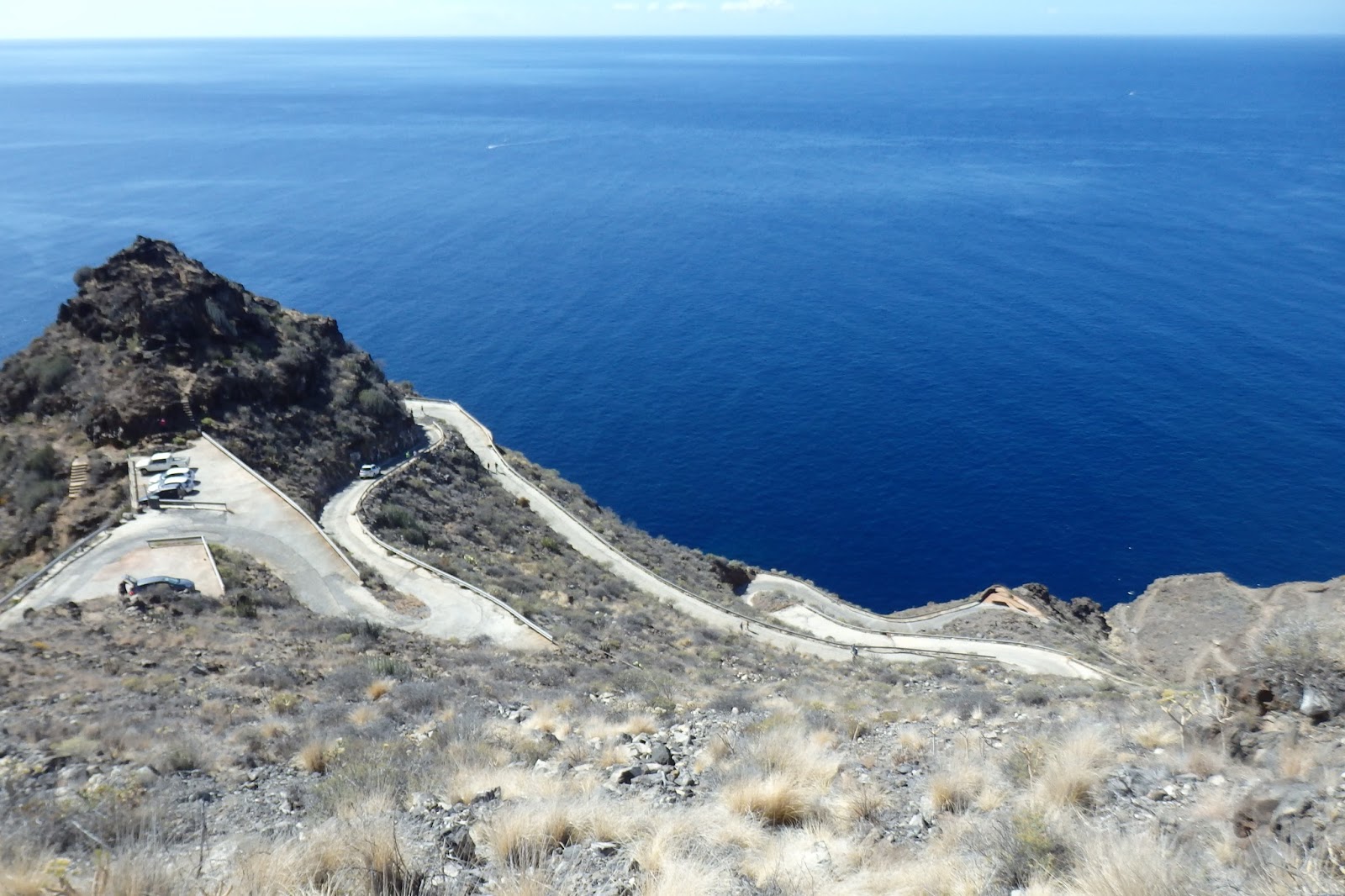
First you drive serpentine after serpentine of steep roads ...
... and then you park the car and it gets really steep!
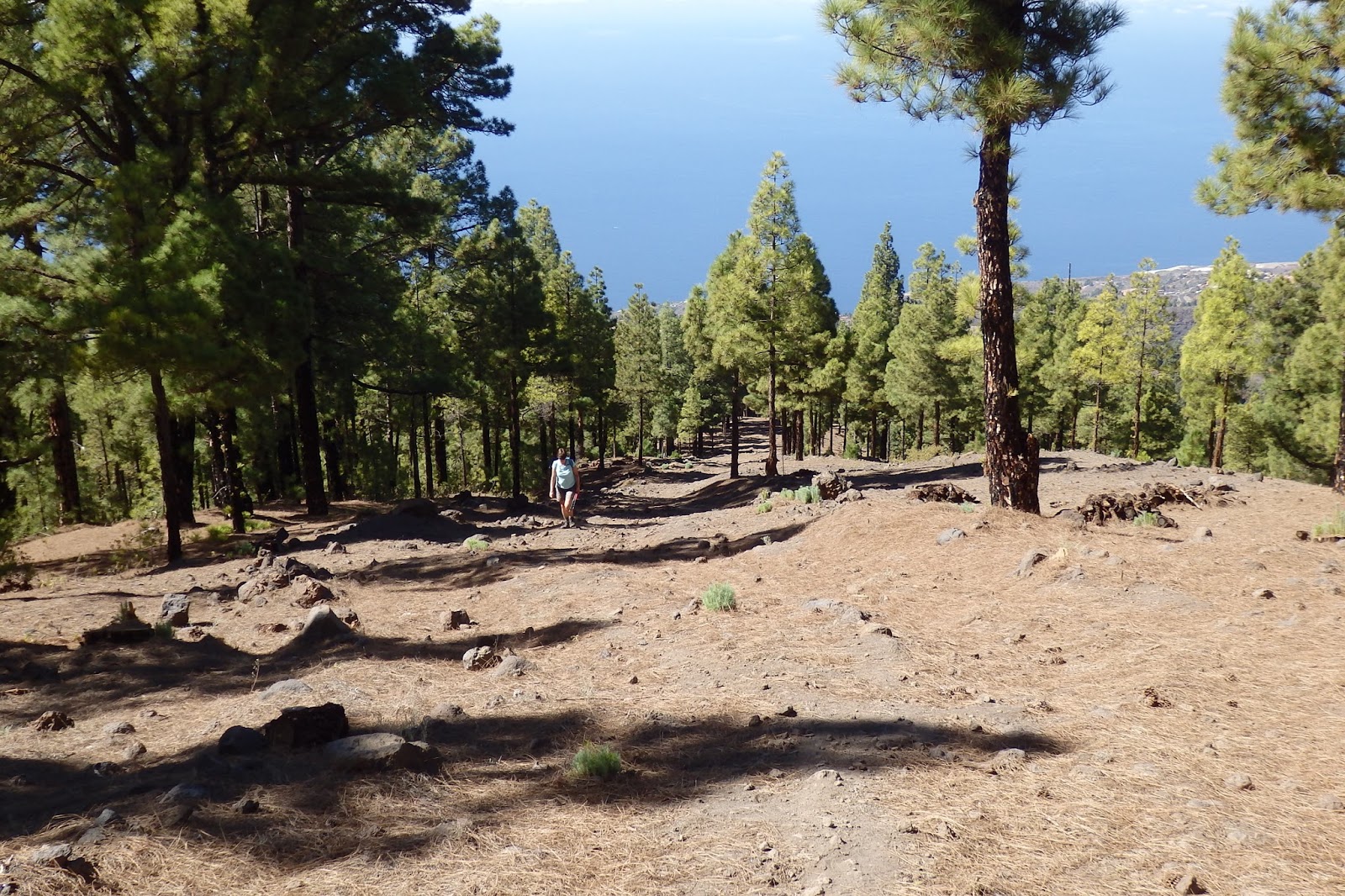
La Palma is located in the southwestern area of the Canaries, which themselves are located in the Atlantic west of Africa (Morocco). Similar to Madeira, they typically enjoy a year-round climate of spring-like conditions with a long dry season and a much shorter wet season that allows large forests to grow on the windward slopes of the volcanic islands. Our various guidebooks gush about the verdant valleys with rushing water, but it seems that climate change is starting to take its toll here, too. The always predictable rains have not arrived the way they did for centuries, and much of what we have seen of La Palma is desperately parched. Our house, located on the west side of the island and surrounded by a pine forest, reminds me of all those homes in California that recently were destroyed when fires raged through sonoma and Napa. As a matter of fact, on our hikes we have seen many indications of large forest fires over the years,with only the most hardy pines surviving. Just in case I parked the car every night Kojak-style for a better chances of escape. Really.
The countryside is parched
Dry and diseased paddle cactus
Typical palmero house in the north-west part of the island
Almond about ready to fall off the tree
The pine trees are green, but fires have removed any underbrush
We had decided on La Palma because we had been looking for a warm destination, preferably a place we hadn't visited before, that we could reach by cashing in some American Airlines miles. We hit the jackpot with a one-stop flight from Munich on Iberia. A few miles and a moderate co-pay were all it took to cover transportation. Bonus: On the way out we had an 18-hour layover in Madrid where we saw my old buddy Howard and his family, who live less than 10 minutes from the Barajas airport. Using a German rental car website I was able to secure a Citroen for our 10-day stay for less than $6 a day--however, I have to admit that we spent another $95 on full insurance since we were not able to decline some of the coverage that was automatically included in the rental and my credit card company was a bit iffy in regard to whether they'd cover any eventualities if I didn't nix any supplementary insurance. So, that left the VRBO rental of our wonderful house, which came to about $100 a day for first-class accommodations.
With Howard and his wife, Lidya, and the always-lovely Karen on the way to La Palma
The little Citroen somehow managed all those steep inclines. Kudos!
Our VRBO rental, built into the mountainside with a porch that overlooked the Atlantic
La Palma has so many faces. Every day we have gone on hiking excursions, and every day has been different. It's hard to pinpoint a favorite. Whether you hike through laurel forests and get bombed by falling chestnuts (and the edible kind has some very pointy husks!), or you cross lava fields that are just 50 years old, whether you hike above the clouds and the astronomic observatories on 2,426-meter-high Roque de los Muchachos, or cling to almost vertical cliffsides on the way down to the old port of Puntagorda, it all is stunningly beautiful. No wonder so many Germans come down here to hike and enjoy the sun. If Madeira is firmly in British hands, well, the Germans have laid claim to La Palma.
A gaggle of German tourists on a guided hike
Edible chestnuts hurt your head when they hit you!
Normally, this photo should be dripping with water!
Dragon trees
Without going into blow-by-blow details of our hikes, here are some generalities. First of all, we lucked out with the weather in that every day was calm and sunny (not a good thing for the local plant life, but we took the bonus). When I bring up "calm," please remember that this island is surrounded by the sheer endless Atlantic, and if it blows in Lubbock all the time, well, it should gale here! But not while we were here. We had read about the quickly changing weather conditions and how important it is to always carry raingear and a warm hat, especially when hiking at elevation, but we had no problems. In the sun it was warm, if not hot; in the shade, temps were in the high 60s, as they were at night. In other words, we experienced the most beautiful of late falls one can imagine, except that this seems to be the norm here.
Trails were well marked, but this cairn went a little overboard!
All you need is a map and a general idea of where you want to walk
A vineyard at about 1,300 meters
Of course, we had brought our hiking boots, and without them not much would go here. The trails are rocky and often loose, and the steepness is staggering. If you don't have proper footwear, you're not going to get far. Navigating was much easier than expected. I had downloaded a free app called Locus Maps that allows to use detailed maps off-line, and the accuracy of the map for La Palma was simply amazing, down to the last few meters. Established and marked hiking trails, roads (paved or unpaved), minor trails and local footpaths are all captured, and with instant GPS location we were able to follow routes that we had mapped out the night before (with an internet connection). Add to that descriptions from the guidebooks that Sabine had on loan from some friends and the local library, and the generally excellent rail signage, and we were set. Add two small backpacks, collapsible hiking sticks for the worst of trails,  and a few waterbottles plus a daily lunch, and you're ready to roll.
The north coast is much wetter than the western part of the island
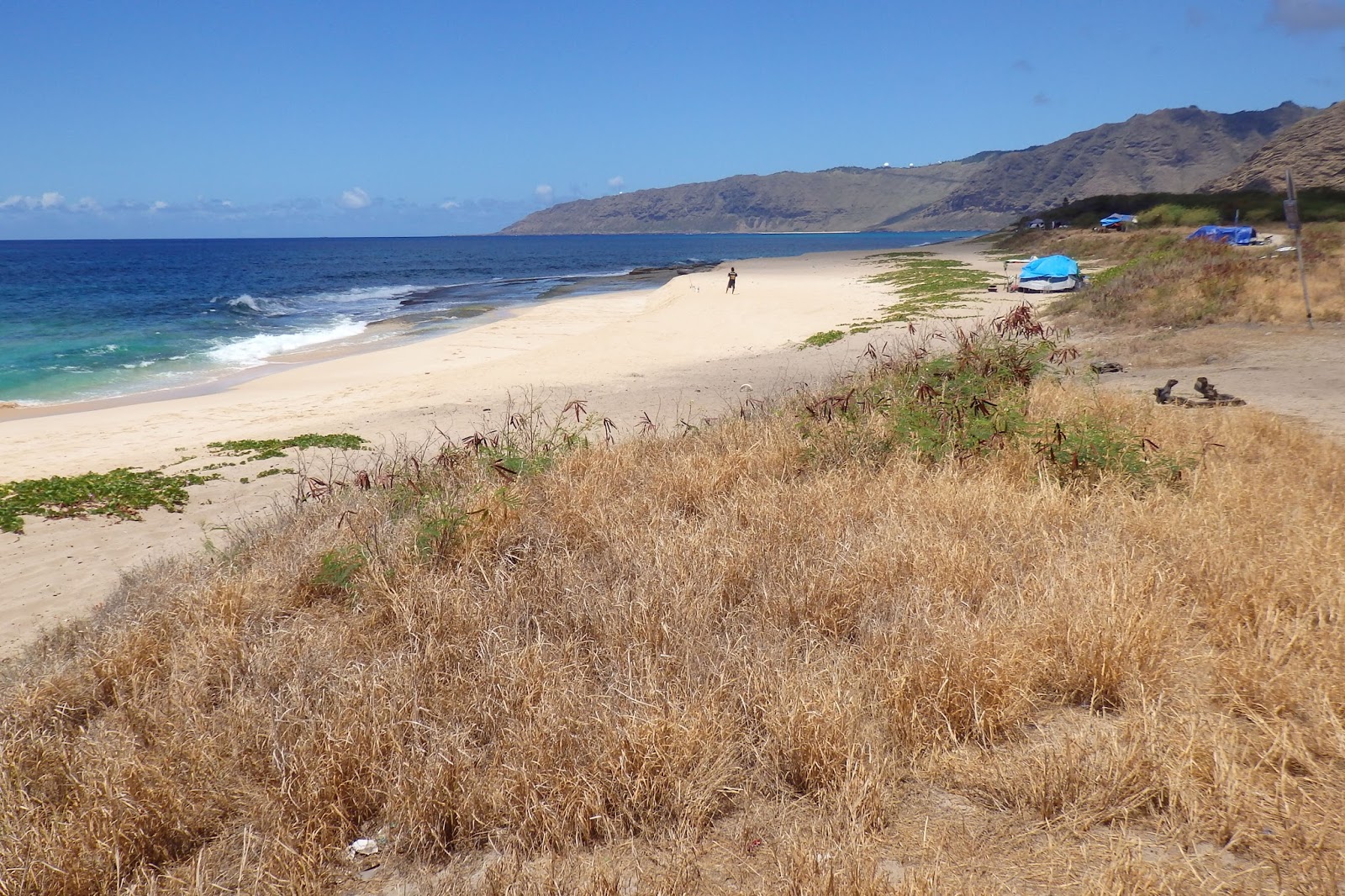
All beaches on La Palma feature black sand
Trying to suck in our guts ...
When was the last time you were above the observatories?
Daily distances varied between about six to eight miles, which at first doesn't seem to be all that much until you realize that about 2,100 to almost 3,000 feet of elevation change were packed into these relatively short distances. When we hiked, we hiked--and at the end of the day, our legs told us that they had done most of the work. Fortunately, it was never very far from wherever we had parked the car to the next little town and a kiosk where we'd have a beer and a few tapas before heading home. We even found the allegedly one-and-only operating microbrewery on the island, Cerveceria Isla Verde, at the end of one long hike just a few miles from home. Yeah!
Beer on the beach (after packing it in)
Big cold beers ...
... and yummy tapas
The bird kept us entertained
As mentioned earlier, we were on the west side of the island, which sees more sunshine and less rain than the north and east. Most of the big banana plantation are located here, and with their immense tent structures that protect the plants they look like giant concrete bunkers. A very strange sight. There are also unprotected plantations. and we could never figure out the difference. Back in the late 19th century bananas became the major export commodity for the island, making their way mainly to Britain. Even today they are the biggest money maker, even ahead of tourism. Of course, much of that success seems to depend on funding by the EU. Sabine has an insight or two into how EU moneys are being doled out for projects both deserving and totally asinine--one of them, a 50+ million euro harbor in Tazacorte whose only purpose is to attract aliens as a gigantic spaceport, or so it seems. Shipps of the kind it was built for have never anchored here.
Banana plantation with tent cover
All those beige-colored areas are banana plantations under tents
Some of the tents are starting to fall apart
Inside of a tent
The ultra-modern (and unused) Tazacorte harbor
Old-fashioned fishermen with the day's catch of bonitas
There's a reason they call them yellow-fin tuna
We saw a few other buildings and projects that looked totally out of place, obviously subsidized with money from richer European nations who have no idea where their tax dollars flow in the grand scheme of things. Maybe the Brexit has some valid footing.... It wasn't quite clear to us whether the roads and streets that cling to the mountain sides like strings of swallow nests are simply the pinnacle of the evolution of ancient walking paths or whether EU money has played a role here as well, but they sure are miracles of civil engineering and old-fashioned construction. Rock walls holding back the mountain sides are examples of the finest imaginable stone-masonry. And if you think a road can't get any steeper, well, it can.
Cave building at Cueva de la Candelaria
The steeper, the more secluded
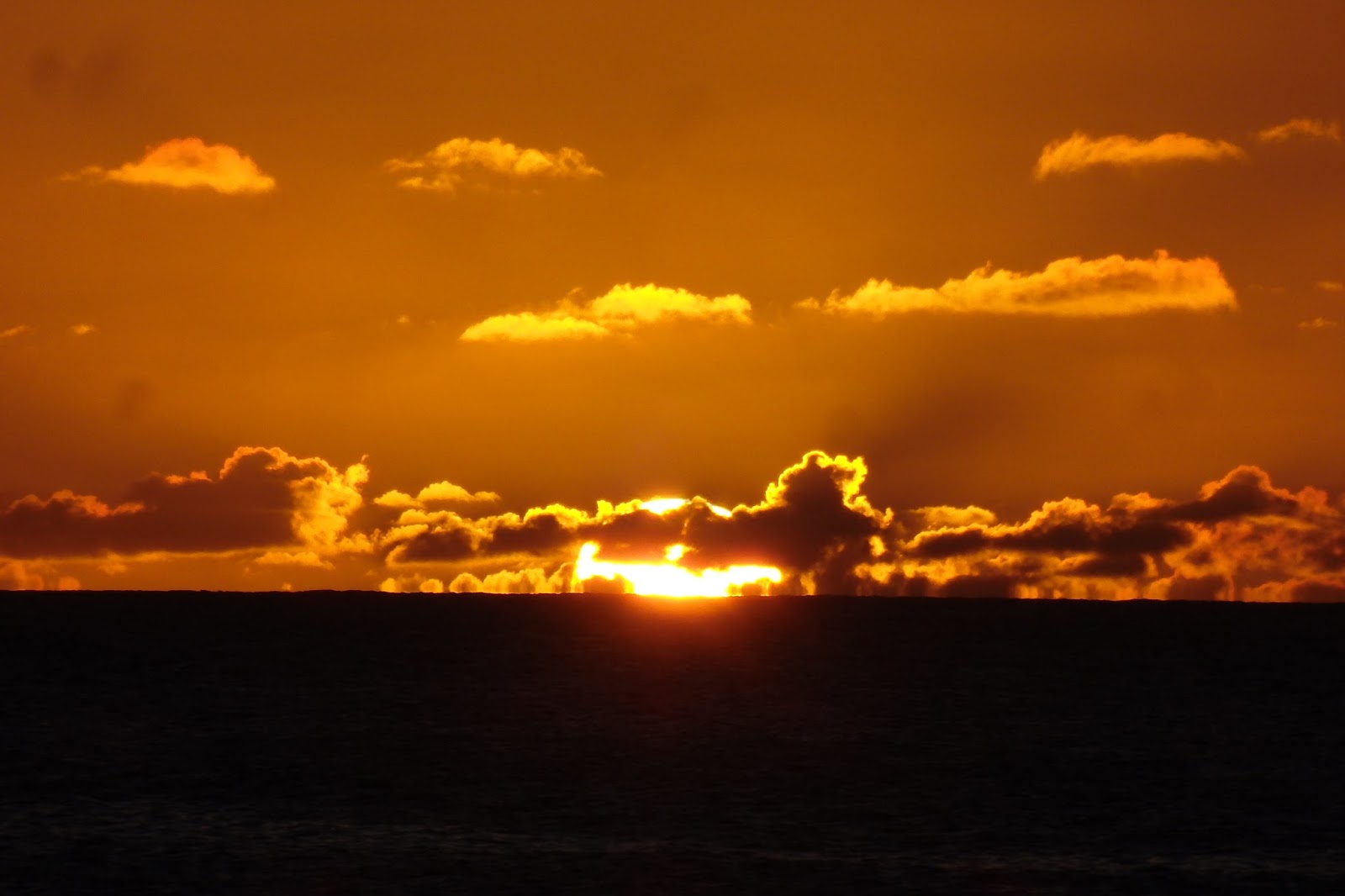
Late afternoon sun on the west coast of La Palma
Crossing the lava fields
Every one of our hikes had a different character, and every day we saw new stuff. For example, I had never heard of the dragon trees that one finds mainly in the northwest corner of the island. Gofio was another new one to us, a type of flour ground from various cereals that then are fortified with whatever may be available, such as lupine seeds. The original inhabitants of the island (conquered by the Spanish in 1492 just before before Columbus launched his final hop across the Atlantic to discover the Americas) already knew of gofio, and it still is a staple for the older Palmeros. We visited a gofio mill, which reminded me of our world-class windmill museum in Lubbock.
The old gofio mill close to Puntagorda
No, we were not flying when I took this photo of the immense port facilities of Tazacorte
Dragon tree stands close to our house
Hiking along the Caldera de Taburiente was one of the most impressive sights we had, if one discounts the immensely steep and abrupt cliffs that fall into the ocean. The views that we had of this ancient caldera, down toward Tazarote and the banana plantations will stay with me for a long time.
Hiking along the rim of the Caldera de Taburiente
The Caldera de Taburiente in the afternoon light
That's what it must look like on Mars
I could go on and on, but it's time to close things down and publish this blog post. La Palma is a bit out of the way, but from what we saw, I'd recommend a visit to anyone who's looking for something extraordinary.


Jürgen

Saturday, October 14, 2017

2,237 miles of driving in three weekends--bring on those races!


The first snow of the season in NM
Since coming back from Hawaii on a Wednesday afternoon a little less than three weeks ago I have worked three bike races, letting the Beemer pur along and racking up the miles. Thank goodness, gas prices continue to be low (this morning, Walmart in Lubbock was getting $2.09 for regular unleaded when I was driving by on my way out of town), and race organizers pay us the standard USA Cycling-mandated mileage charge of $0.46. You can do the math.
My favorite: riding the chairlift to the top of the mountain!
Still, it's a lot of driving. My first trip was up to the mountains, not even 24 hours after getting back home from Oahu. The Rocky Mountain Bike Conference was having its championships in Angel Fire, hosted by Adams State University, and I was the one and only official for the two-day event. Normally I'd arrive late Friday to start my duties on Saturday morning, but since race organizer Tamera Rice-Daniels had never been in charge of a bike race we had agreed that I'd arrive one day earlier, Thursday night, to help her out on Friday.
Tamera gets a chance to shine at the awards on Sunday afternoon
Well, good thinking. With four events (short track, cross country, dual slalom, and downhill) packed into two days (at Mountain Bike Nationals in Snowshoe we had six events in a week, and I was assisted by seven officials!), and the organization of the event was in the hands of USA Cycling and not an eager but still completely neophyte race organizer, there was a LOT of stuff to take care of. Thank goodness, I knew the lead guy for the Angel fire crew, Patrick, and scoring was going to be in the hands of Cath and John from CJ timing, but still.... Let me just stay, I did a lot of hand-holding and Tamera, the organizer, learned a whole bunch more about race promotion than she would have thought possible.
Fall colors in Angel Fire, NM
While the weather in Angel Fire (especially on Friday and Saturday) was simply awful (I had to cut short Saturday afternoon's DS midway through the competition when we had another t-cell move through the area, necessitating us to evacuate the mountain), the next weekend saw gorgeous fall weather (OK, let's call it what it really was: late Texas summer with temps in the upper 80s). I had been appointed as Chief Referee for the two-day Gritty Teeth Cyclocross Festival in Belton, just a few minutes away from Temple. And thus I got to stay once again with Martha and Alan. I had a private room and enjoyed nice dinners, and the racing action was fun. Once again I was the only official assigned and had my hands full, but I worked with two gracious race organizers, Joy and Chad, and they assigned two dynamite volunteers, Murph and George, to assist me. Somehow we managed to start an entire weekend of hundreds of cyclocrossers on time, and our results didn't draw any protests--best of all, though, we all had FUN!
No, the arch in Belton was NOT over the course because ...
... this can happen!

Back in Lubbock it was back to the same routine: post-event paperwork, unpack, wash clothes, go to the grocery store, and try to ride the bike when possible. I had a few nice dinners with my neighbor Janet, and then it was time again to leave. This weekend I am in Georgetown, about halfway between Temple to the north and Austin to the south, for yet another cyclocross race, the Georgetown Cyclocross Festival. This time I am one of a crew of four referees. My old friend Joe Morgan is Chief, and he and I joked a little while ago about his having a crew of three additional officials while I had to fend for myself these past two weekend. Oh well, thus it goes. I am the "pit official" for the weekend, so my responsibilities are somewhat lighter than in the past few weeks. Fine with me!
The sandpit at the Georgetown Cyclocross Festival
We're done with an uneventful, on-time, nicely executed Saturday race schedule, and the plan is to  go for a repeat tomorrow and drive back home tomorrow (Sunday) night, a long 370-mile-or-so haul since I will be leaving for Germany on Tuesday morning and I'd prefer to have the entire Monday to get ready. Good racing, good people, good life.

Jürgen

Wednesday, September 27, 2017

Spur of the moment decision: Let's go to Hawaii!

Oahu's South shore, scenic beyond belief
Sometimes plans change: Sometimes, people get sick and die; sometimes races get cancelled; sometimes I fall off my bike. No, not this time, at least not the latter. But, unfortunately, Sabine's mother's unexpected diagnosis and subsequent passing changed our plans for Sabine's coming to the US, and a race in South America for which I had been planning for months vanished without much of a trace. So, instead of driving with Sabine through Central Texas on an exploratory trip I ended up working a cyclocross race in Elgin, TX, and then the Texas State Road Championships at Ft. Hood. And before I knew it, wanderlust overcame me and I had a First Class ticket to Honolulu in hand. Thanks, American, for charging me only $11.80 for taxes and fees. For once, using miles was easy and fun.
A study in contrasts: The arid West shore ...
... and the verdant East shore
So, a week ago I arrived on Oahu, after just a few days of planning for this trip. But that was enough time to contact my old commissaire buddy Scott who calls The Rock home. A few emails later, and I had secured a room in his pad in Honolulu. To get around the island, I needed wheels, and since RCI timeshare points are almost worthless I cashed in a generous amount for a rental car that cost me the transaction fee of $25. Good. And for my last two nights I invested two C-notes for an Airbnb room on the North Shore, about a 4-minute walk away from the spectacular coast. Bingo. That's the way to travel.
The Ritchey, with Chinaman Hat island in the background
Chinaman Hat island--I found a skinny dipping spot right here, away from the cars
I had been to Oahu at least once before--I can't remember exactly. The trip I do remember was a fabulous cycling vacation with Judy, when we circumnavigated the entire island and camped out every night in a different State Park. To do so, you need reservations for each and every night, but the permits are free and they give you access to truly choice spots, nice facilities, and a safe environment. That trip was enough for us to put Oahu a notch above the Big Island and Maui, which we also visited over the years. For this trip, I took the Ritchey along to ride and see beautiful coastlines and just relax. With a rental SUV (Dollar miraculously upgraded me from a Pinto) I was able to easily access the various starting points of my daily jaunts, avoiding boring and intensely populated stretches and trading them for miles and miles of shoreline.
For miles I rode mere feet away from the Pacific; this was one of the best shoulders I encountered
Incidentally, when I arrived in Honolulu my man Scott was in Vegas for Interbike, so I had to do a little bit of beer sampling (Waikiki Brewing Company, Honolulu Beerworks, and Aloha Brewing) all by myself. At the Beerworks (located next to the shop where Scott works!) I started up a conversation with a local, Rick, who'd later on taught me how to stand-up paddleboard when I got to the North shore. Beer, the universal facilitator... Here's to you, Rick!
Like a native, well, almost
With my new Hawaiian friends in Haleiwa, on the North shore
During my five days of riding in Hawaii (today was a pure beach day since I had to check out of the Airbnb), my Ritchey and I covered 216 miles on all four coasts of the island. Let me tell you: The sights are magnificent! And the roads mostly suck! I just read a comparison of road quality for all US states, and Hawaii is just slightly ahead of D.C., Rhode Island, and Pennsylvania, but not by much. Well, I believe it. Even if there were a few smooth shoulders (wide enough for a bike to feel safe, but not a TX-sized one), the majority of infrastructure that a cyclist has to contend with is pure and simple shit. Broken pavement, potholes, shoulder width reduced to the disappearing white stripe on the side of the road. This is not for the faint of heart. You need to contend with car after passing car as the number of roads is limited and there's only one road that leads around the island. The traffic isn't fast, with 35 to 45 mph speed limits in most places; still, the constant parade of passing cars is different from what we experienced 20 or 25 years ago.
Proud to be American
But the scenery makes up for it. Let me tell you: The best way to ride around an island that's not run by the British is counterclockwise. Why? You'll be riding right next to the water! Literally, for mile after mile I was less than 10 feet from the lapping waves of the Pacific. Good thing that bozo-in-chief Trump calls global warming fake news, because if it were real, a lot of the areas where I rode would be in a bunch of trouble. Of course, who cares about whether global warming is real when all it takes is a well-aimed missile from North Korea. Believe me, that thought entered my mind more than once.
Lava beach on the North shore
Parrot fish caught in a tide pool
The North shore
It's difficult to sit in a perfect spot on the beach, overlooking the Pacific with night falling, and thinking about how nutty we humans can be. There are those palm trees, the sounds of the waves, the first twinkling stars--and we don't seem to realize how fragile all this is. It's not just nuclear armageddon: It's the 19-year-old son of the Airbnb host who thinks that recycling beer bottles is "just not worth it," and billboards by the road complaining about the use of wind turbines to generate electricity. To each his own.


The beauty of riding a bike is that one can stop anywhere. Unbelievably, there are still untold miles of pristine beach, without a soul in sight! OK, I didn't say that there aren't some souls around, they're just not in sight. It doesn't seem that much has changed in regard to the huge numbers of homeless people who live in make-shift shelters somewhere along the coast, mostly trying to remain out of sight and out of trouble. Shopping carts, burned-out cars, plastic tarps, mattresses, and jerry-cans for drinking water are the signs of civilization in lots of places. Judy would tell me about various social agencies on the mainland would buy a one-way ticket to Hawaii for their problem cases, and that practice may not have ended. That's the other side of paradise, and it's a very obvious one.
Burned-out cars by the side of the road are a common sight
One of thousands of make-shift homes
Tent, bike, a few belongings--the other side of paradise
The Cadillac of the homeless population
Quick: What's the state bird of Hawaii? Of course you wouldn't know unless you rode a bike around the island. It's the CHICKEN! I swear it must be, because they are everywhere: on the shoulder, on the beach, in parking lots, in people's yards, cackling and running around with tiny chicken keiki! Google the question and you'll be mislead into believing that it is a type of goose, the nene, but that obviously can't be true. The only question that I have: Why are eggs so expensive?
Well-trained cat--or a disaster in waiting
Lubbock may have grackles, Oahu has chickens!
Yep, things are expensive out here, with few exceptions. For example, I was surprised that gasoline was selling for $2.85 to $2.98 a gallon at a time when Lubbock's price was around $2.35. Of course, they haven't had a recent hurricane here that laid waste to the gulf refineries, but still--I would have thought it'd be higher. At McDonald's you can still get a large drink for a buck, but that's where it ends: Go to any food truck and expect to pay between $12 to $15 for an order of fish tacos or garlic shrimp. A big shaved ice (yep, they charge not only for the ice and syrup but an additional 50 cents for the container they put it in, plus of course tax) will empty your wallet by a fiver. Bread, milk, meat, any staples are way higher than on the mainland. Heck, I can buy Hawaiian Dole pineapples in Lubbock for half the price they are commanding here. It may be paradise, but you better have a well-paying job to enjoy life out here.

It's time to close things down as my red-eye flight to Phoenix will start boarding in about an hour and I still need to add some pics to this post. I'm sure glad that I came out here for this repeat visit, and I must say that I had a really, really good time. In about 48 hours I will arrive in Angel Fire, NM, for another collegiate mountain bike race, and before I go to Germany in mid-October there are another two races downstate. A man has to make a little bit of money--how else would I be able to afford the $11.80 airfare, eh?
4 minutes from my Airbnb
Almost like Lubbock ...
Jürgen

Tuesday, September 5, 2017

Crashes, and unfulfilled dreams of steel drums

Another day, another crash ...
Let's get the nasty stuff out of the way first: Since my last post a few weeks ago, I once again was involved in a bike crash. On Tuesday, August 22, I was out for my usual morning road ride when one of the legs on my Kestrel EMS fork failed and I hit the ground. I'm not exactly sure what happened since I apparently was knocked out for a short period (I was by myself, so this could have been 10 seconds or a few minutes), but the results were not pretty: My face took a lot of abuse as you can see from the picture, my left wrist is still sprained (but getting a little bit better every day), several fingers of the right hand were jammed like in the days when I played basketbal and handball, and both legs had some good bruises and scrapes right above the knees. I saw my dentist since one of my front teeth was a bit loose and also showed a slight chip, but I may have dodged the bullet and the tooth may actually be fine in the long run. My septum appears to be cracked or worse, but what good is it to run to the doc and get an x-ray for the better part of a C-note and be told "not much we can do about that"? And the rib is healing on its own, too. Things could have been much worse.


A few days later I was making the (almost) annual pilgrimage to Wichita Falls' Hotter'n Hell when I witnessed an oncoming 18-wheeler jackknife on rain-slick HWY 183 and plow into the median. I was the first one on the scene, and thank goodness there was no fire since I would have been totally helpless with the two occupants being trapped in the cabin, hanging upside down but thankfully being responsive. I called 911, other cars stopped, and first responders were on the scene in less than 15 minutes. That experience was certainly not a good omen for Friday's crits and Saturday's road races, but the crashes that did occur were limited to road rash and no broken bones, at least in the races that I worked.
Now, that's a serious crash!
Two days later I was off to Trinidad and Tobago, for the 2017 Elite Pan-American Track Championships. Well, guess what, people crashed here, too, incurring mostly nasty burn wounds from sliding on the fast wooden track of the beautiful indoor velodrome in Couva, about 45 minutes south of Trinidad's capital of Port of Spain. For five long days I saw not much more than the inside of the velodrome, in the company of old friends such as Juan from Argentina and Hector from Colombia. Rainier from Venezuela and Omar from Argentina rounded out our international crew. Our days started with our 8:30 a.m. bus ride in the Sexy Rabbit (a nickname that was based on a sticker on the back of the bus) to the velodrome, for the morning session. A few times things took longer than expected  and we simply stayed in the 'drome until the evening session, which started at 6:00 p.m. Juan and I would finish our work as late as midnight, and then we'd be shuttled back to our hotel, the Cara Suites in Claxton Bay.
Is this called track rash?
If that doesn't sound like much of a vacation, well, it wasn't. We pushed long hours, saw very little of Trinidad, had rice, pasta, and chicken for every lunch and dinner, and had to get our cultural capsules through conversation with our warm and friendly Trini hosts. They are certainly nice people down here: They are open, have a quick smile and an even brighter laugh, and they are interested in the world beyond the island. I had lots of interesting conversations, be it with a janitor, a shuttle driver, a security guard, or a race doctor. I learned a bit about the history of this dual island country that celebrated its 55 years of independence from Britain just a few days ago. Whenever I mentioned that I live in Texas, genuine sympathy would immediately well up with questions about whether my house was OK and my family and friends were safe in the aftermath of hurricane Harvey.

This is the Couva velodrome, a modern and well-equipped facility
As mentioned, we spent the vast bulk of our waking hours in the velodrome. On the last day of the competition, however, we had a few extra hours, and the organizers arranged for our crew to go on a short bus excursion to Port of Spain, about 45 minutes to the north of Couva, where the velodrome is located. (The 'drome is part of a larger sports complex that includes a modern swim facility as well as a large soccer stadium. Unfortunately, word doesn't seem to have made it around that this facility exists as daily spectator attendance was dismal.) I had hoped to see some of the Trinidad that comes to mind when one hears the name, but the reality here on the west side of the island is different: We barreled down a four-lane highway full of cars, trucks, and buses, traversing a commercial and industrial area that stretches for mile after mile. Refineries belch out noxious fumes, and nature can only be imagined in the mountain range toward the north. Trinidad and Tobago have about 1.3 million inhabitants combined, but fewer than 100,000 of them live on the much smaller Tobago, and the bulk of the population is concentrated on the west side of Trinidad.
Afternoon excursion to Port of Spain, Trinidad's capital
A Trini, as they call themselves 
Port of Spain's malecon, with hints of Venezuela in the very far distance
Port of Spain may have a grandiose name, but from what we saw it is a dirty place that is just now starting to try to preserve some of the British legacy in the form of some of the old buildings. There's preciously little to attract a tourist, and our driver admonished us to stay close together and be careful when we took an hour-long stroll in downtown. On the attractiveness scale I'd give this place one out of ten possible points. Don't waste time here.


And so we drove back to the velodrome, passing fairly crummy-looking shopping malls that our driver proudly pointed out. Had the bus broken down, there would have been enough repair places to get us rolling again. The visual onslaught of billboards hawking everything from Nestle products to international banks was almost too much. Trinidad most certainly must have a different side somewhere, but we never came close to it. For all the talk about ecology, pristine beaches, and refreshing waterfalls in the tourist booklet in my room, the stark reality of all those smokestacks and rusting infrastructure didn't make me feel as if this could be the same country. How else can one explain the cemetery of seven ocean vessels right in front of the hotel, half sunk, rusting, and looking like the aftermath of Pearl Harbor?
Pearl Harbor just off Trinidad's western coast, in front of the hotel
On my final day in Trinidad, I finally had a chance to eat outside of the velodrome when my shuttle driver took me to a tiny diner where I had roti. Upon his suggestion I ordered it paratha style, meaning that instead of using utensils I gathered my curried goat stew with the unleavened flatbread and ate with my fingers. I felt like Anthony Bourdain in this tiny place, eating the first food on the island that actually tasted of something! Trinidad has a very large Indian population, and roti came highly recommended. It really was a shame that our hotel was so terribly isolated (OK, there was a Kentucky Fried Chicken restaurant within walking distance) and that our work schedule did not allow a little more immersion. I tried my best later in the afternoon when I went to my first (and last) rum shop. Our drivers had told me about the rum shops, which really are bars where one can buy beer and rum in small cordials from the keeper of the place who stays safely tucked away behind iron bars. You exchange money through the bars, get your beverage, and then you hang out. Actually, you lime, as they call it down here. If liming is not allowed in a particular place, signs will tell you so. Well, on my last night I limed, alright, and then had a Chinese dinner (the only other place with food apart from the KFC) in a restaurant that required me to press a bell to gain admittance. Safely back in the hotel I had a final nightcap at the bar, sponsored by a German business man who's been selling heavy equipment to the Trinis for the past 20 years. That was better than the rum shop, for sure.

Immediate surroundings of the Cara Suites Hotel
Downtown Claxton Bay in the evening--yep, it ain't much
Overall, it was an interesting, albeit unsatisfying trip. But I came to work and not to vacation, although the latter is implicit in most of these gigs. Will I come back to Trinidad? Well, maybe Tobago, which is supposed to be a natural heaven. But here, overlooking the stretch of water that on the other side is bordered by Venezuela, I didn't see anything that's compelling enough for me to come back. Except, maybe, the promise of actually seeing some real steel drums and not just the tiny replica that our gracious hosts bestowed upon us. Maybe....

Jürgen